Cover story by me, Bogdana Vashchenko, illustrated with photographs by Viktor Lyagushkin in National Geographic (Georgia) about cave dwelling creatures, and also about issues appeared for the prominent touristic Prometheus cave and how to fix them.
Tag Archives: ecology
Let Everyone Saves One Tree! – National Geographic (Georgia)
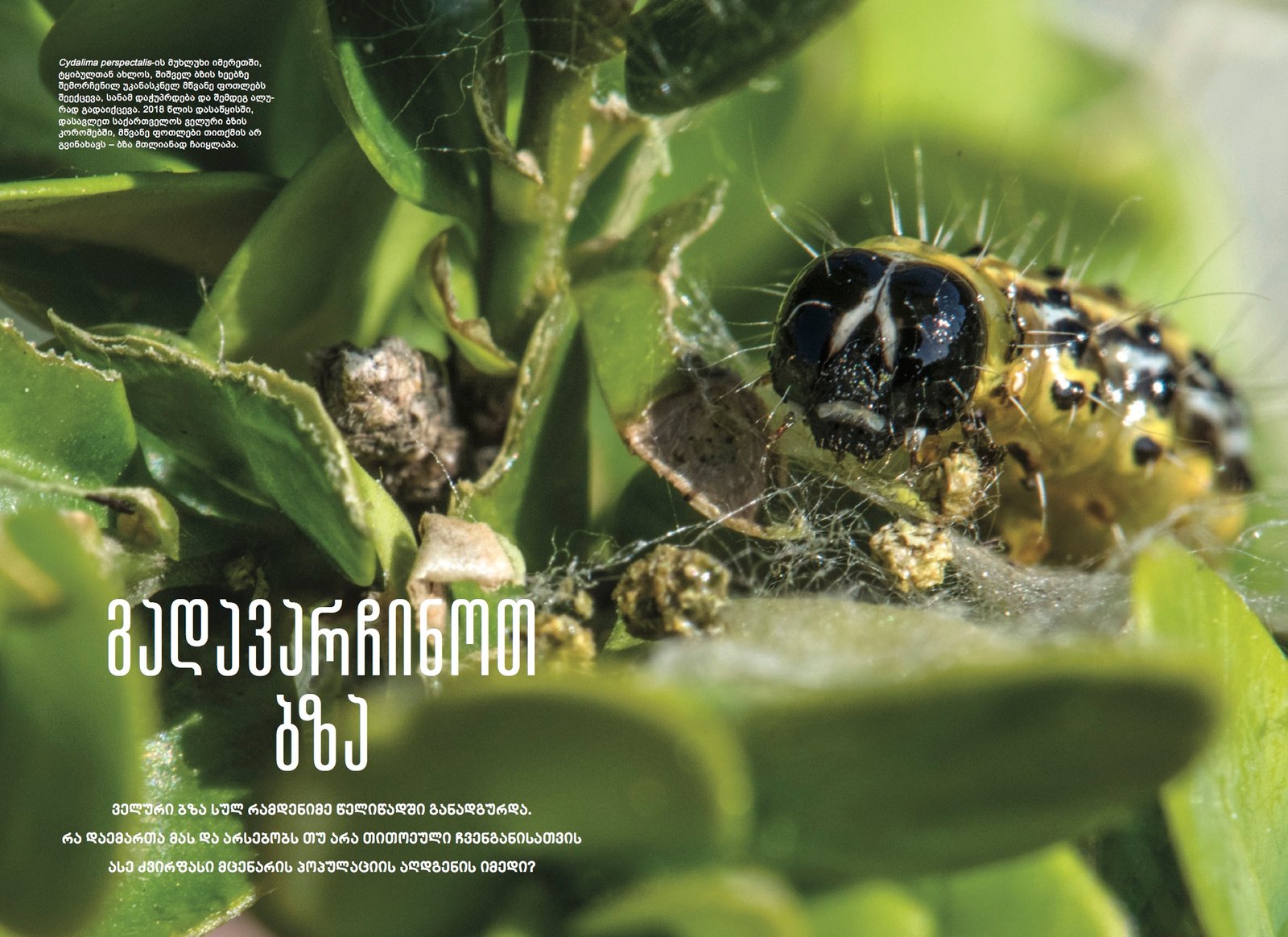
Let Everyone Saves One Tree! – is the main message of my article about Colchis boxwood, published in the November 2018 issue of National Geographic (Georgia) Magazine.
Boxwood is a special plant for Georgia. In just a few years, the Colchis boxwood almost completely disappeared from the wildlife of the Caucasus, eaten by an invasive insect – a boxwood moth brought from the Far East.
The article describes what kind of plant it is, and what is its main enemy, what are the ways to save boxwood, and what has already been done.
Photography by Viktor Lyagushkin.
Many thanks to everyone who helped in the photoshooting and writing of the article.
Ethereal Creatures Living Under Arctic Ice
See the Amazing, Ethereal Creatures Living Under Arctic Ice is the title of a story which is now live on National Geographic site. It features Viktor Lyagushkin’s photos and text includes my answers and captions.
Viktor is proud to have his work being so highly estimated and I am happy that my captions have been preserved almost in its original form, with only minor editing.
Thank you, Sarah Stocke, for good questions and thoughtful work!
//www.nationalgeographic.com/animals/2018/09/white-sea-arctic-underwater-marine-life/
Permanent Exhibition in the Georgian National Museum
A permanent exhibition dedicated to the biodiversity of the Caucasus was opened at the National Museum of Georgia (Tbilisi) a couple of days ago. The National Geographic (Georgia) Magazine took part in the creation of the exhibition. The visitors will admire dioramas, read and listen to information about the fauna and flora of the Caucasus. Among the most valuable exhibits of the exhibition are stuffed animals, some of which had been made 150 years old. It is sad to realize that already many of these species are not to be found in the wildlife.
In the National Geographic educational corner which is located in the second hall of the exposition, films are unspooled on two screens. Among them there is a documentary about the expedition into the National Park of Vashlovani. It was an assignment from National Geographic (Georgia), during which me and Viktor Lyagushkin spent a couple of months collecting material, making pictures and capturing video about this wonder of nature.
A Sign of Leopard To Come
Big story in National Geographic Georgia Magazine by me, Bogdana Vashchenko, illustrated with photographs by Viktor Lyagushkin, about Vashlovani National Reserve, our of the oldest National Reserves in Georgia. It’s an honour for us to be published in the festive issue of the Magazine, dedicated to its 5-th Anniversary.
Working on the story I was so impressed how it had been possible for all sides to Mind-Meld: the government, non-state organization NACRES, and shepherds.
Here in Vashlovani it is easy to see how strongly tied humans and nature.
To Stay Alive – Feature Story in GEO Magazine
Well, it’s another reason for our collective pride. A feature story in the popular science magazine GEO (Russia) about environmental problems of Baikal. Unusual and ancient animals, Baikalian sponges are responsible for the purity of Baikal water. But something happened, and the epidemic broke out in the sponges. What happens at the bottom of Baikal, what do scientists do, and how to find the cause of the disease – in this piece for GEO, September 2016.
Aliens in Baikal Lake
My piece in National Geographic (Россия) Magazine (Nov 2015) dedicated to ecological situation in Baikal Lake.
In the autumn of 2013 near the town of Severobaikalsk storms washed ashore about a half thousand tons of tangled thread-like algae; the green mass laid rotting on the shore and spreading an unpleasant smell. Accumulations of stinking slime appeared near other settlements around Baikal. Local people were worried. Then jittery news began to appear, that the Spirogyra – so the name of alien had been heard for the very first time – kills Baikal.
In 2015 Baikal Limnological Institute announced the situation was caused by anthropological influence and urgent measures are needed.
The Lake is on the edge of ecological catastrophe. We did media coverage of the development of the situation; the results are published in the different magazines and documentary at My Planet Channel. Are Russian authorities going to change the situation? We have a hope that pressure of public (both Russian and International) opinion would have influence. The PHOTOTEAM.PRO is going to come back and complete the reportage about threat of death of the biggest fresh water reservoir of our planet and its unique biological ecosystem.
UPD: The article online is here